Tag Archives: Shakuhachi spirituality

“Why the Shakuhachi matters in a divided World”

Happy and Healthy 2025!

I’m glad to share another inspiring post about shakuhachi written by the “Komuso Khronicles“: “The Shakuhachi: A tool for Interconnectedness Beyond Words, part 2” (see the original post down below).

A few reflections after reading the post

We cannot be reminded enough to stay connected to the essence of the shakuhachi. Whether it is during a public performance or a lesson with your teacher, what does really matter?
Your competitive mind, your ego, wants you to prove yourself. To prove yourself to yourself. To impress others and get external validation. To be good enough. To be the best.

The technical control on the flute is the way to express yourself the more accurately possible. It is a tool, not a goal.
Your sincere shakuhachi playing, the sounds you dare to share with the world, this is what matters. Breathe.

“Its sound bypasses the intellect and speaks directly to the heart, creating a space where differences dissolve, and unity prevails.”

What if you saw the shakuhachi as a bridge?

“A bridge between individuals, between the self and the universe, and between the personal and the universal. “

What if you saw the shakuhachi as a manifestation of impermanence?

Each note arises, resonates, and fades away, reflecting the impermanence of all things.

What if you saw what you’re experiencing while playing, performing, learning, practicing, breathing, as a tool to grow in your life?

The shakuhachi aligns with the personal dharma (duty or path) of self-discipline and growth. Learning to play it requires patience, focus, and humility, cultivating virtues that bring harmony to one’s life. Additionally, sharing its music can foster connections and peace within a community.

What if you saw the shakuhachi, however humble its international influence, as a profound and universal tool of interconnection?

Playing or listening to it can evoke a sense of unity with the cosmos, serving as a meditative practice that transcends individual ego and dualistic thinking.

“Why the Shakuhachi matters in a divided World?” Continue reading!

Continue reading “Why the Shakuhachi matters in a divided World”

Shoshikan meditation practice and Shakuhachi

I’m reposting here an inspiring blogpost about the Shoshikan meditation practice from the blog “Komuso Khronicles” written by the Komuso monk Fuu. As mentioned at the beginning of the post:

Shoshikan (初心観), also known as “observation of the beginner’s mind,” is a Zen meditation practice that emphasizes maintaining a sense of curiosity, openness, and acceptance, free from preconceived notions or biases.

At every stage of your shakuhachi journey, it is essential to stay in touch with your beginner’s mind (curiosity, openness, acceptance, creativity, wonder, etc.). I sometimes see in my students the beginner’s enthusiasm fade when faced with the technical difficulties of the flute. Developing a non-judgemental attitude based on self-observation helps you navigate the ups and downs of the journey.

The article covers several important aspects of shakuhachi playing: Breath and Awareness, Tone Quality, Physical and Mental Posture, Unity of Breath-Body-Instrument, Self-Discovery and Connection to Nature, as well as a comparison between Shoshikan 照思観 and Suizen (吹禅 – Blowing zen)

Happy reading! Feel free to leave a comment and to subscribe to the Komuso Khronicles!

The Benefits of Shakuhachi on Stress

Stress and Shakuhachi – Part 4

Deep breathing

Whenever I give live online meditation sessions on the meditation app Insight Timer, I invite the participants to practice deep breathing meditation with me. I often tell them that if they practice regularly in a safe situation like at home or during the sessions, they will create a habit, a power they can tap in whenever they find themselves in a more challenging situation.
The day after my last live session in February and the following weeks, I could experience how right I was!

How can shakuhachi help to go through stressful situations?

Continue reading The Benefits of Shakuhachi on Stress

A Shakuhachi Trip to Japan!

Happy 2023 and Happy New Year of the Rabbit!

Hope you’re having a good start of the New Year. Did you make good resolutions? Do you have a new motto?

My motto for this year is one I took from the online yoga teacher Kassandra Reinhardt, whose videos I’m practicing daily.

🎶 I’m worthy of good things 🎉

Joy, Shakuhachi music in tree pose.

So what is my big project for 2023?

Continue reading A Shakuhachi Trip to Japan!

Online Meditations 2022

Did you know that my weekly online meditations, which I started in May 2020 during the Covid-19 pandemic with the purpose of staying connected and blowing together for better health in the world, are still going on?

Every week on Wednesday, we blow shakuhachi and meditate together for 20 to 30 minutes on Zoom (10 to 15 minutes Chakra Meditation and 10 minutes RO-buki.).

During the sessions, the focus goes inwards. You connect to your body, to your inner peace through your breathing and blow with full awareness what your heart tells you (solidarity with the world’s sufferings, healing, compassion, love, emptiness, silence,…), uniting your sounds and efforts with those of the other participants. 

A group of people coming together in a state of presence generate a collective energy field of great intensity.”
(Eckhart Tolle)

UPDATE JUNE 2023

After more than three years, the Online Meditations have reached their end. It is no longer possible to join.

If you are interested to meditate with me, please join my Virtual Shakuhachi Dojo on Patreon or follow me on Insight Timer.

Support to the blog is still welcome!

Continue reading Online Meditations 2022

Let’s Celebrate Milestones!

When comes the end of the year, let’s take a moment to look back, reflect and celebrate accomplishments!

Shakuhachi Milestones

What milestones did you reach this year? What new pieces, techniques, did you learn? Can you be grateful to yourself for your efforts? (and your teacher’s?)
Even holding on to your practice is already an accomplishment. More, (more pieces, techniques, etc.) is not always necessary.
Or was it blowing RO? Gaining in awareness? Listening to yourself? Releasing excess tensions?
Is there anything related to shakuhachi, even small, that can you celebrate?

Other milestones

Think about your work, your personal life, your social life,…, what milestones can you celebrate?

Do Less

Doing less can also be an accomplishment: what things, thoughts, did you let go of that didn’t serve you anymore?
Did you make space for new things, or just made space for… more space in your life?

Five Milestones

Could you pick up (up to) five milestones and celebrate them? What were the five most important things for you this year?

Allow me to celebrate with you my top 5 shakuhachi milestones!

Continue reading Let’s Celebrate Milestones!

Shakuhachi Secrets

There is something mysterious in shakuhachi, mysterious and profound. Is it in the sound? Is it in the notation? Is it in the music?
I remember the lessons with Fukuda Teruhisa sensei, when we were avidly listening to his explanations with the hope of understanding the music and the notation a bit better. I am not talking about how to play the piece technically. I am talking about how to play it properly and uncover its secrets. It could sometimes seem unclear because it asked us to listen even more carefully to our sensei, to the music and to ourselves. Playing shakuhachi is a quest towards one’s self. It is much more than making sounds with a flute.

Continue reading Shakuhachi Secrets

REFLECTION

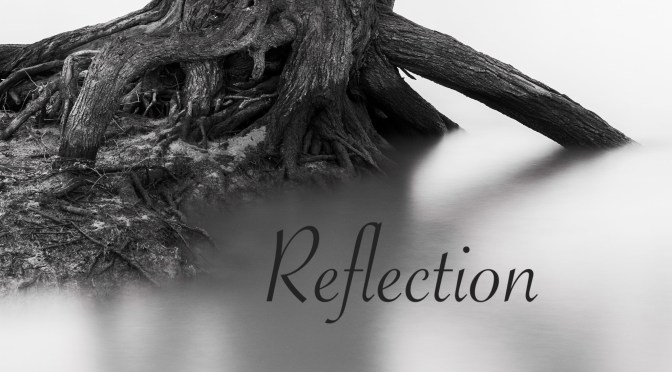
Reflection CD Cover

My new CD “Reflection” is live !! This project started in the last trimester of 2019 with the composition of the first meditation pieces and it followed me into the Covid-19 period. Just when the pandemic started, I was about to perform some of my new pieces during a meditation concert that got cancelled. The first one of a long row… But these compositions and this recording project supported me day-in day-out, until I felt that it was time to release them into the digital world.

So here it is and you can listen to it through this link on your favourite digital platform.
Or listen and buy your favorite tracks on Bandcamp.

The beautiful cover photo was taken by my husband Wim Scheenen. Please have a look at his inspiring website.

A short review by Elizabeth Brown (December 2021)

These days, I often find myself turning to Hélène Seiyu’s new CD, Reflection. It’s beautiful to listen to in order, as a whole–or, you can choose a single piece and let it repeat endlessly, as meditation. 

Seven of Hélène’s compositions are anchored by two traditional pieces, Neri Sashi and Higo Sashi, all played in a resonant setting on large instruments. Her own compositions sound both freely improvisatory and firmly rooted in the tradition; only a shakuhachi player could write these pieces. I love Hélène’s playing; every sound and every pause come from deep in the heart. We all need this kind of music now.

Elizabeth Brown, composer/performer.

Continue reading REFLECTION

Shakuhachi Wisdom

Inner & Outer Journey

In the history of shakuhachi, there is a strong shift: when the shakuhachi went from being a spiritual instrument to becoming a music instrument. It was at the end of the XIXe century, during the Meiji era. Actually it was a dreadful period for Zen Buddhism, thus shakuhachi. The Komuso monks were not allowed anymore and had to give lessons and concerts to survive. The shakuhachi took its part in chamber music with koto and shamisen to play “sankyoku“.
Apparently the zen tradition was still allowed in a couple of temples (to be practiced secretly?) and after some time, was allowed more officially again. I am not an historian so forgive my approximations in this story.

What inspires me is how the shakuhachi survived this transition: opening to the outside world. Like it followed an underground stream to reappear further, when its time had come again. In the meantime, the Tozan school of modern shakuhachi was born and Japanese music was more and more influenced by the Western culture.

And then, in the 1960’s, shakuhachi was almost dead again. Shakuhachi master Yokoyama Katsuya realised that the shakuhachi had to be brought further to the outside world, meaning outside of Japan. Shakuhachi reached the USA, Australia, and later Europa and the rest of the world, other Asian countries included. The interest for traditional shakuhachi in Japan is still low (please correct me if I’m wrong here), but still exists. And shakuhachi has reached different of styles of music: jazz, pop music , movies, video games, etc.

Yet, the spiritual tradition is still alive and has been developing more and more outside of Japan as well. This is fascinating. It makes me wonder whether you need a balance between the inner and outer world to embrace shakuhachi fully. If so, how do you find this balance?

Continue reading Shakuhachi Wisdom

Dark and Light in 2020

What a year!!

More than any year I have been struggling this year with the question of the usefulness of being an artist. The pandemic situation revived in me the urge to do something for others. What could I do as a shakuhachi player?

Insecurity

Insecurity is already part of an artistic life, whether you like it or not. So maybe, as an artist, I was better prepared to deal with the feeling of insecurity caused by the pandemic. This shows us how fragile – and strong- we are. Playing shakuhachi helps me to accept my vulnerability. At the same time, the deep breathing with long breaths quiets my mind and gives me strength. “A long and healthy breath to all” has become my daily prayer. Just blowing one note, RO, is enough to connect to the deep peace inside me. When I play ROBUKI online together with my meditation group, I feel my sense of groundedness increasing, I feel the energy flowing through my body and the negative emotions being chased away.

Connect

Connecting to people became suddenly challenging. Coping with the lockdowns and the constant changes of situation throughout the year, months after months, has been really difficult. I am grateful that some of my students followed me online and that I could continue teaching and interacting with them. I am grateful that I got to know new students from different countries. The closing of physical borders opened a digital world of Zoom lessons ; travel issues turned into Internet connection stability and digital sound quality problems ; but still we remain connected and this feels good.

As a teacher, my best reward is when I hear students connect deeply to the shakuhachi. It can be during a few notes or an entire piece and it has nothing to do with technical level. During these magical moments, it doesn’t matter that the sound travels through the microphone and speakers of the computer: it just goes directly from heart to heart.

2020 = SHARE

So what could I do? Nothing else but keeping on doing my work, as good as I can. Teach, compose, inspire, send good vibes and share shakuhachi music.
SHARE has been my main goal for 2020, the one I set at the beginning of the year in January, it has been my mantra, my good resolution. I am grateful I had one because it truly helped me through the year. Although it turned out differently from my intention in January, things happened that not had happened without the current situation.

Continue reading Dark and Light in 2020