

It was very important to me to play in nature during my trip to Japan. There is so much inspiration from nature in traditional honkyoku (solo music for shakuhachi) and in general in Japanese arts and culture, that reading about it was not enough, I wanted to experience it.
I had selected a few places I absolutely wanted to go to: mountains, bamboo forests, waterfalls. I practiced several pieces I wanted to play there. Playing in nature means obviously playing by heart.
Improvisation was not my goal, as I wanted to experience the connection between specific honkyoku and its environment.
And May was a fantastic month to listen to birds as well!
My short trip of 16 days was way too short to cover all that I wanted to discover, but the experience was very strong and I took back lots of inspiration.
Whenever, wherever, I play those pieces now, there is some of the memory of the Japanese nature in them.
Here are the highlights of my trip.
1. Honte Choshi in front of Mount Fuji
As it is often said that Honte Choshi has the shape of Mount Fuji, I had planned to play Honte Choshi in the area of Kawaguchiko. But Mount Fuji was hidden behind the clouds and I ended up playing only RO!
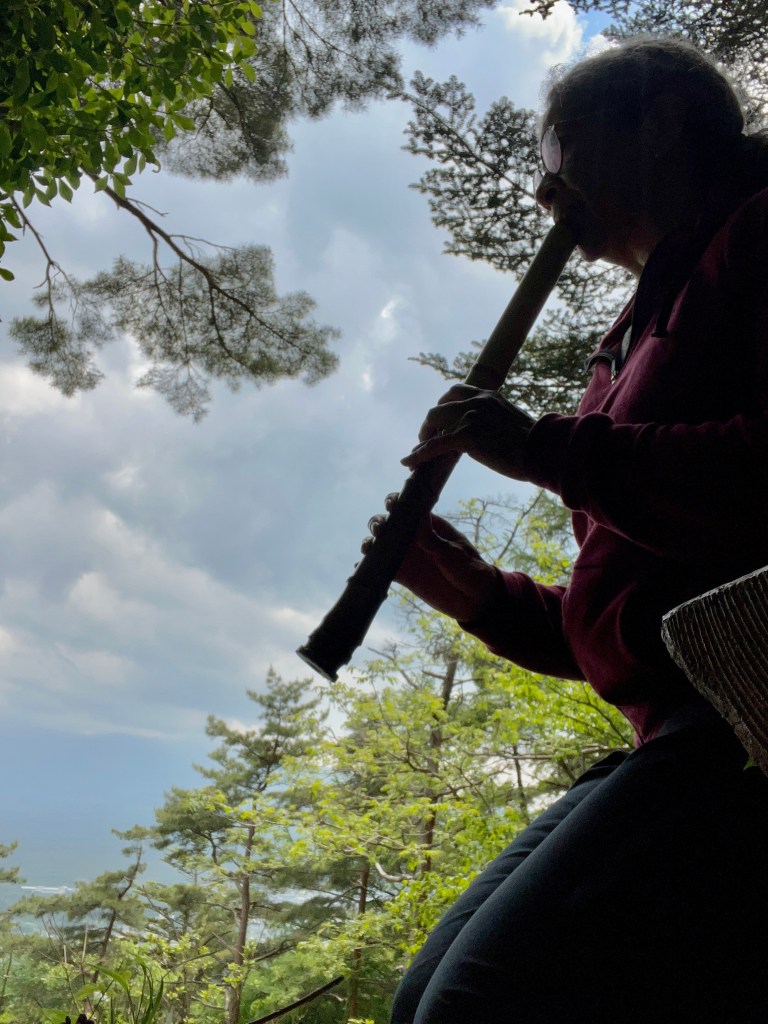
I must confess that, at the beginning, I was not really feeling comfortable playing outside in Japan. I had no clue how people would react to a foreigner like me playing shakuhachi in public places.
I thought previously that I could look for quiet places similar to where I play in the Netherlands, but then I realised that I was not on site long enough to have time to scout around first and come back the day after.
So I humbly played RO as my offering to Mount Fuji.
2. Takiotoshi and the Magnetism of the Waterfall
My shyness totally evaporated when I arrived in front of the Haha-no-Shirataki waterfall. As I was alone, I installed myself for playing Robuki for my 108 Ro-buki challenge, next to the little shrine.
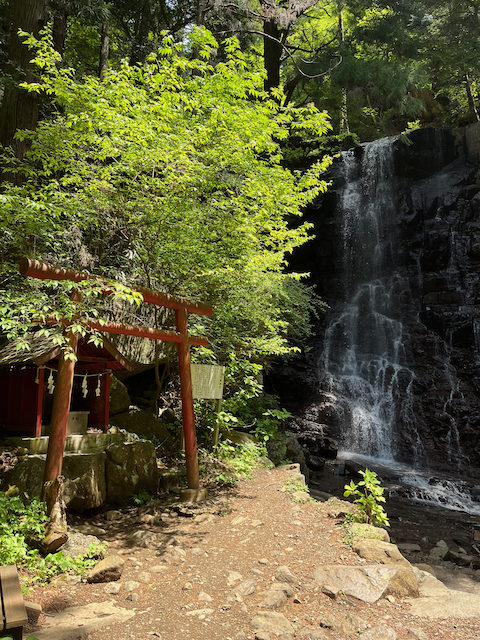
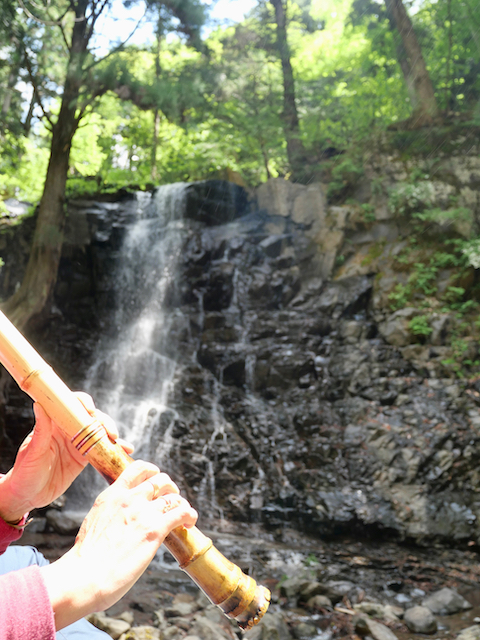
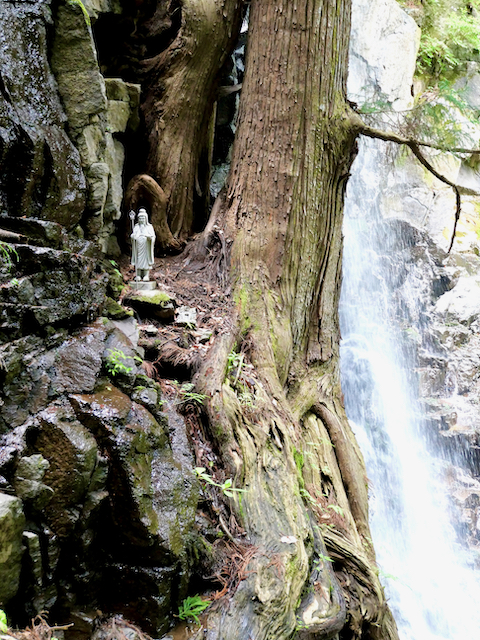
Very rapidly, I got caught in the energy of the waterfall and started to play Takiotoshi (the waterfall). People arrived and went but I didn’t stop playing.
A few young Japanese people who had stayed to listen applauded me at the end. I explained that the music that I just played was about a waterfall.
I got some questions back:
– Is this a shakuhachi?
-May I take a picture with you?
Then I went a bit further up and played Takiotoshi again, and again.
I never felt so strongly the energy of life flowing through the sound and the breathing of the shakuhachi. It was almost overwhelming.
After this experience, no more shyness for playing outside!
I recorded everything I played at the waterfall, but, of course, the sound of the water is overwhelming the flute. I guess there are technical tricks to improve it. For now, here is a short video of this unforgettable day.
3. A personal interpretation of the Jo-Ha-Kyu structure
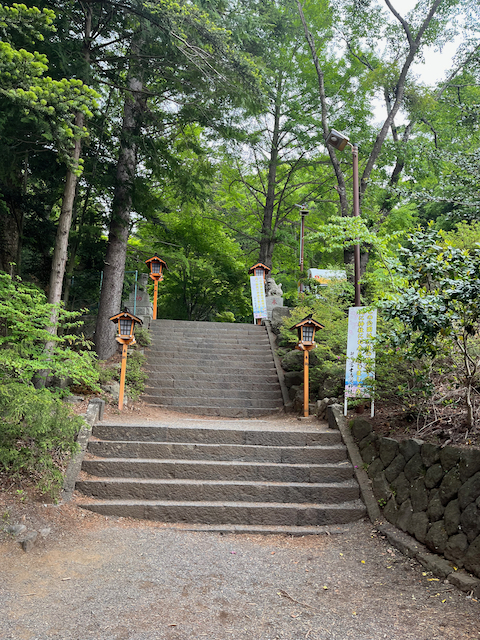
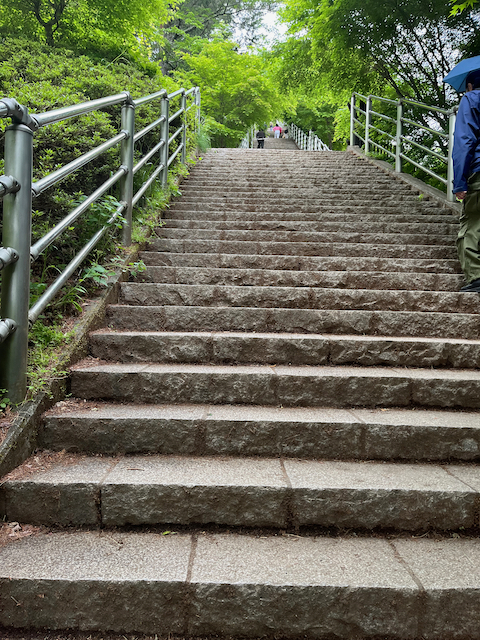
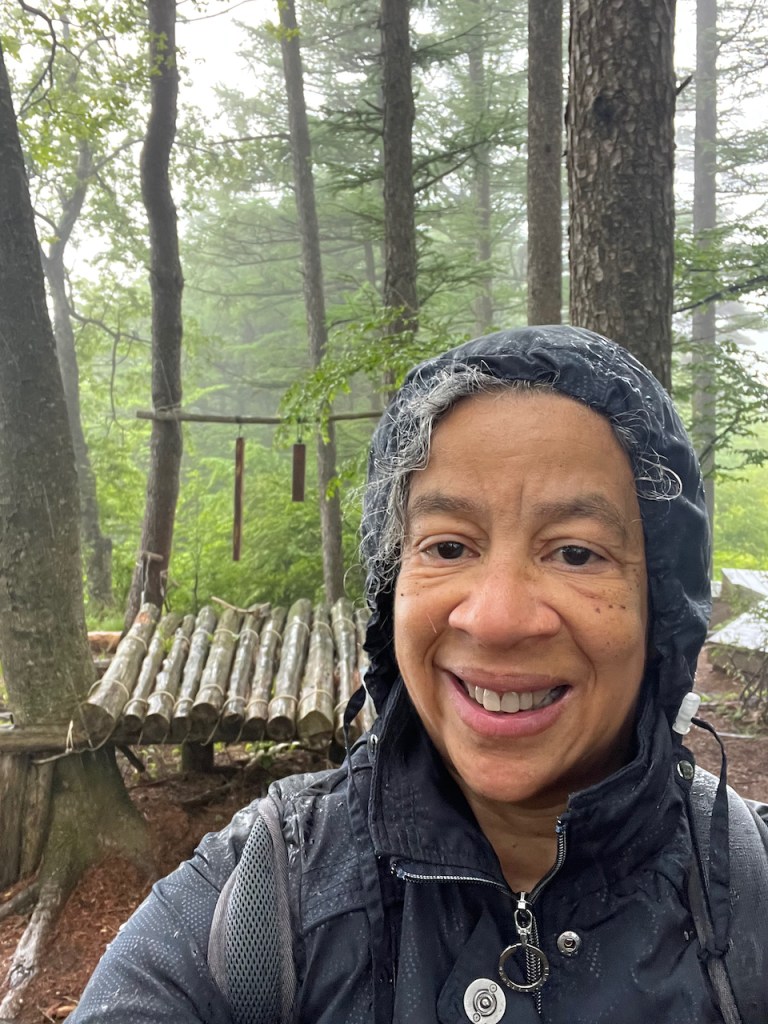
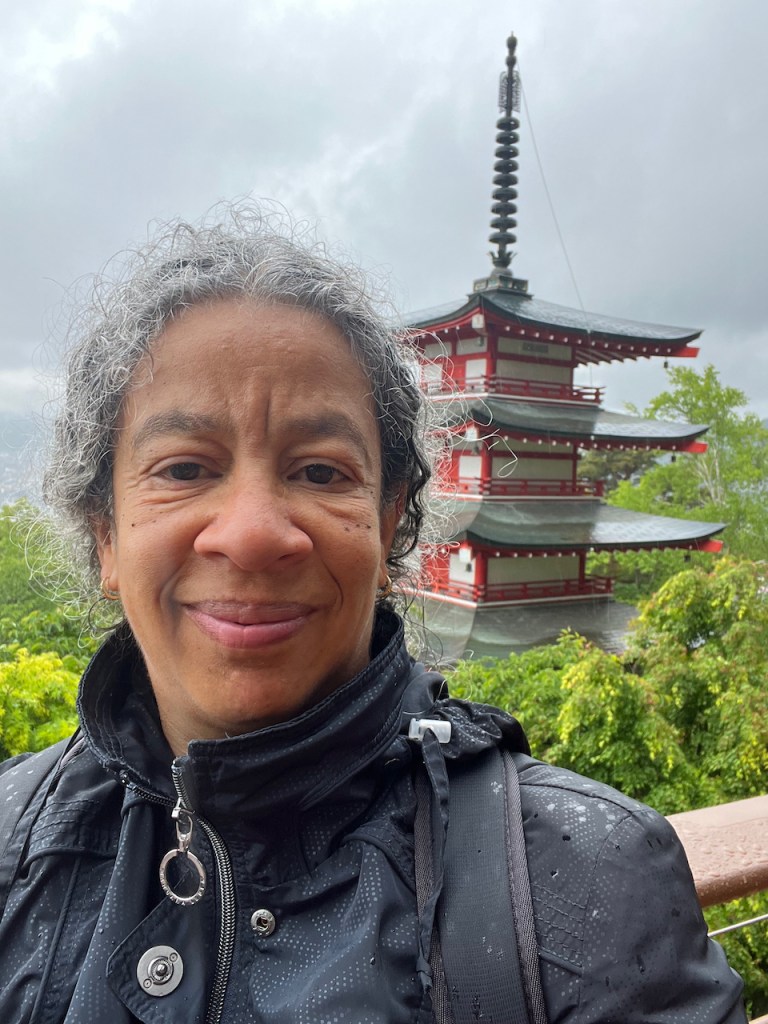
The day after my trip to the waterfall was a rainy day, so I decided to go to the Churei Pagoda without shakuhachi.
Yet, hiking in the mountains above the Pagoda made me think of the Jo-Ha-Kyu structure. I began to wonder to what extent Japanese mountainous landscapes had an influence on traditional arts?
Don’t take this too seriously, I’m not a scholar. It is just that the physical experience of going up and down this mountain stayed in my body and mind, and has come back each time I play a piece related to a mountain ever since! (for example, Echigo Sanya and Jinbo Sanya).
What is a Jo-Ha-Kyu structure by the way?
Jo-Ha-Kyu
“Roughly translated to “beginning, break, rapid”, it essentially means that all actions or efforts should begin slowly, speed up, and then end swiftly.” (Wikipedia)
So in my case, climbing up slowly, struggling, enjoying the view (or enjoying the misty view), going down very quickly!
JO 序 : going up slowly
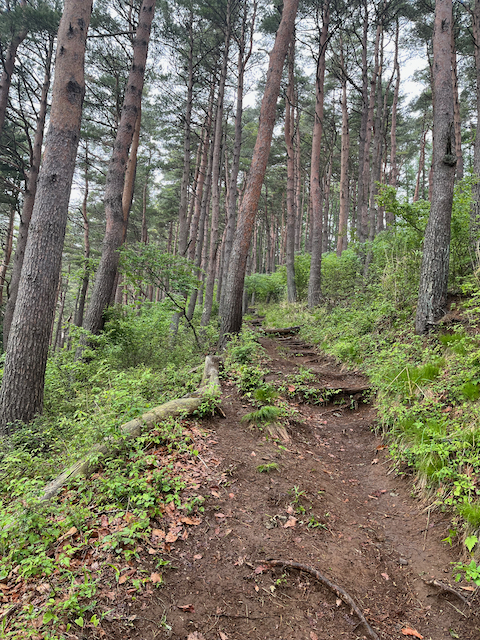
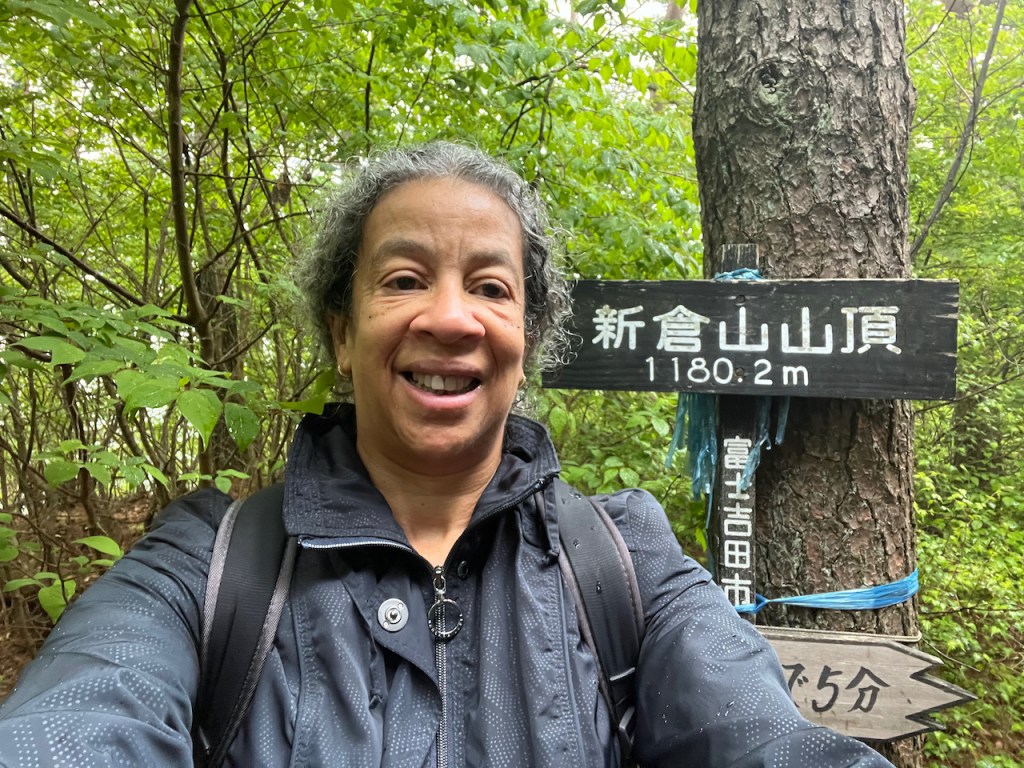
HA 破 arriving at the top while heavy rain started to fall, seeing the fog coming up from the valley which made me think I shouldn’t hang out there too long. I realised I could as well got trap in the fog before getting back down and didn’t want to take the risk on walking the sloping slippery path down in the fog.
KYU 急 Walking down as fast as I safely could, which took me half of the time of walking up. A fast ending to my little adventure!



Actually I could add something to the Jo-Ha-Kyu structure: when you’re back down, take a moment to enjoy the adventure!… That’s what you’ll hear it in the silence following the music…
4. Higosashi and the sound in the deep mountains
I left the Mount Fuji area to go to the Kii-peninsula. I wanted to visit Koyasan (Mount Koya), both for the spiritual and the natural environment.
I found the Buddhist temples way too crowed with tourists for my taste and preferred to hike in the mountains.
I almost got lost in the Koyamaki forest. Playing there was a totally different experience from anywhere else. It is hard to describe it, so I hope that you will hear it a bit in the video I shot there.
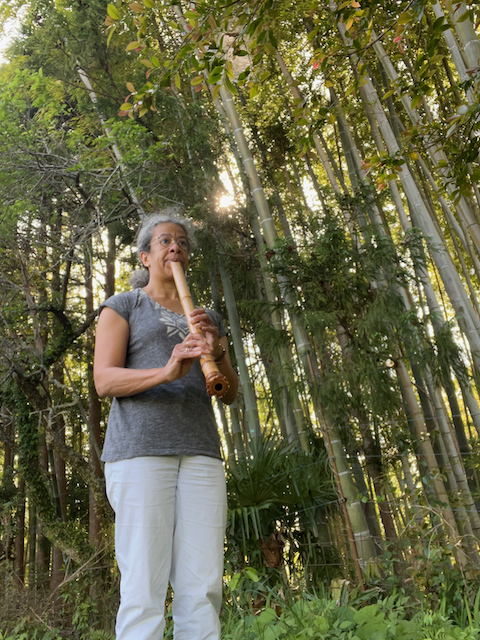
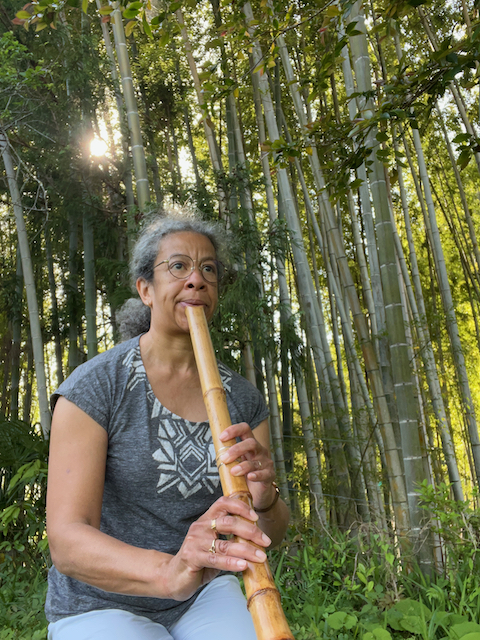
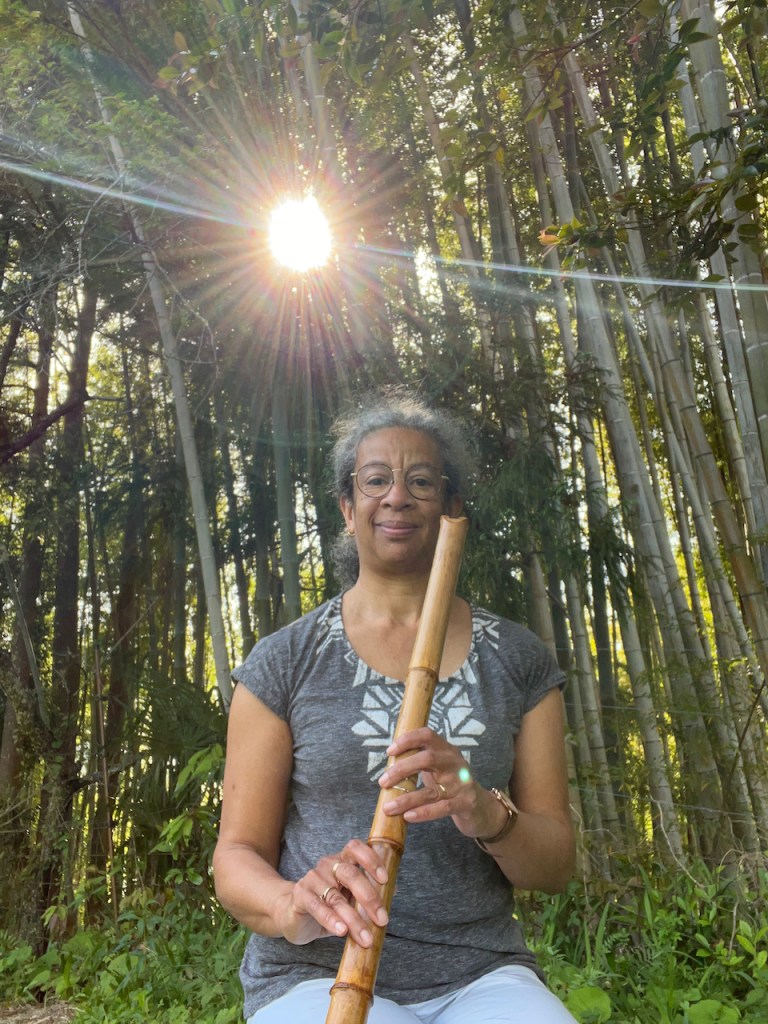
5. A bamboo flute in a bamboo grove
A few days later, I was staying at a temple in Taiji. Next to it, there was a bamboo grove. Small, but enough to feel a nice connection between my flute and the bamboos. I was there early and play several pieces, ending with a full 108 Ro-buki.
The essence of shakuhachi. Happiness.
6. Play in nature wherever you are
I enjoyed playing in nature in Japan so much! It truly gave me extra inspiration and understanding of honkyoku.
But ultimately, it doesn’t really matter where you play, as long as you connect to the nature around you.
If you are a shakuhachi player/student, I cannot recommend enough that you experience playing outside.
Playing in nature in Japan was very very special, but I wouldn’t have enjoyed it as much if I hadn’t played before so much in nature, where I live, in the Netherlands.
So take your shakuhachi out of your room as much as possible!
If you want to watch more of my videos in Japan, click here.
To be continued…
 Hélène Seiyu 聖 優 Shakuhachi